Does Ceiling Drywall Cost More Than Wall Work?
February 1, 2026
Introduction
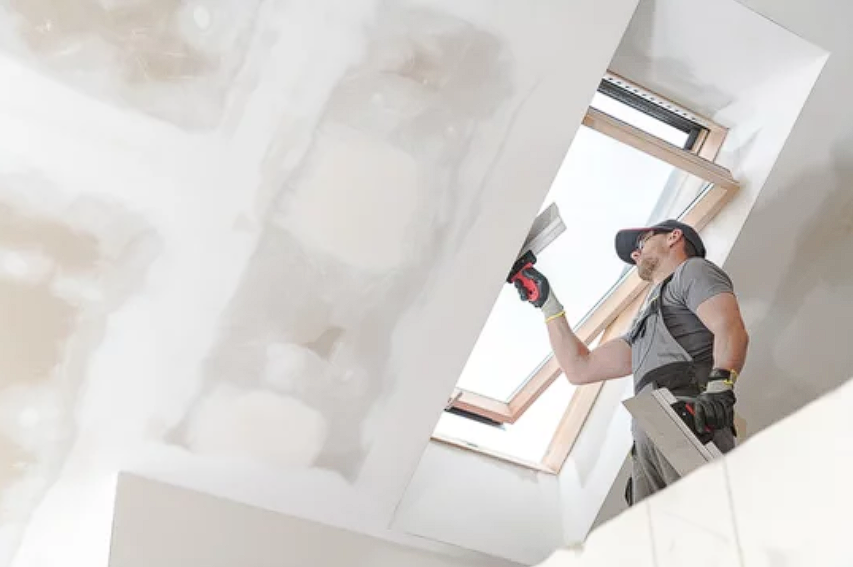
Yes—ceiling drywall usually costs more than wall work. Not because the material changes, but because the surface changes how every part of the job behaves. Gravity, lighting, access, and containment all shift when work moves overhead. Those shifts slow the process and raise the finish standard.
A wall repair can tolerate small flaws. A ceiling repair cannot. What feels routine on a vertical surface becomes precision work on a horizontal one. That is why two repairs of the same size—one on a wall, one on a ceiling—often produce very different estimates.
The Physics That Make Ceilings Harder
Ceiling work is governed by forces that do not exist on walls. Each one changes technique and pace.
Gravity
On walls, compound can be pressed and shaped quickly. On ceilings, gravity pulls material downward. Layers must be thinner. Pressure must be lighter. Every pass is slower to prevent sagging and pull-down.
Light
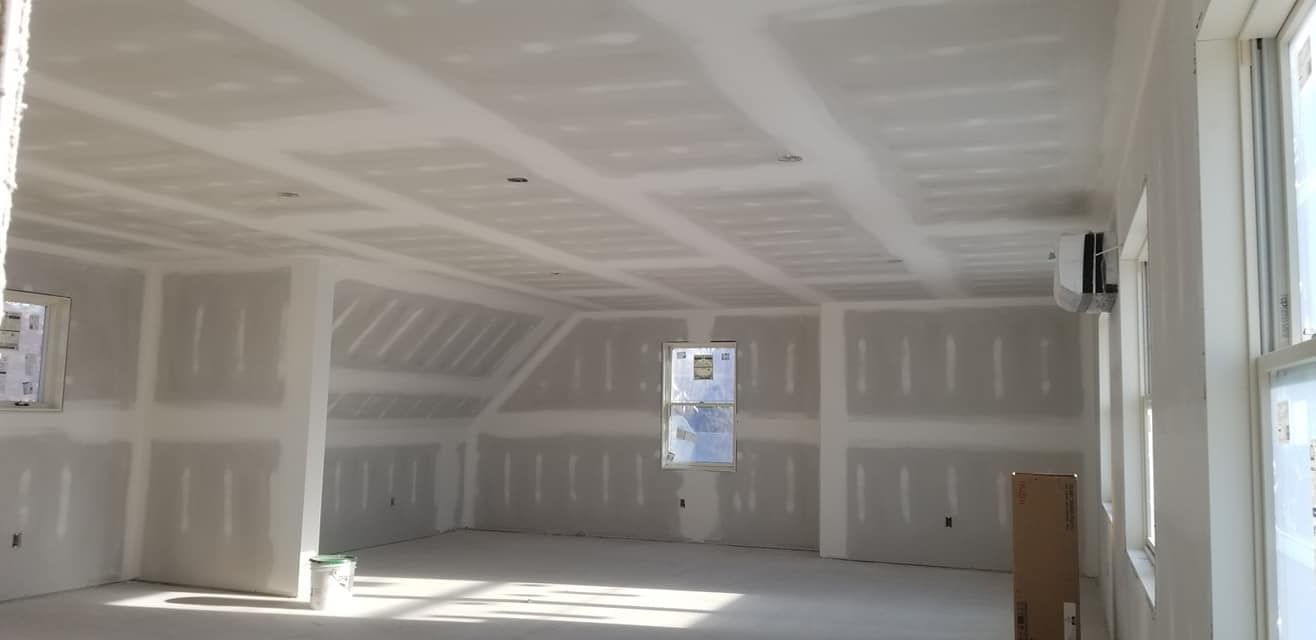
Ceilings are lit at shallow angles from windows and fixtures. That grazing light exposes dips, seams, and texture differences that walls can hide. The finish threshold is higher because flaws read across the entire room.
Reach
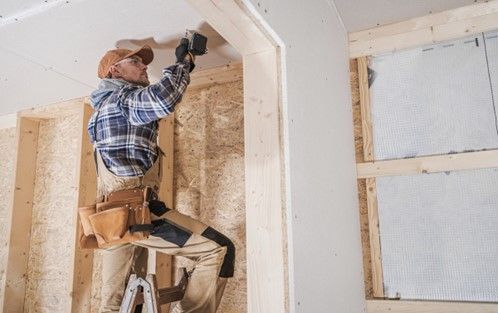
Ceilings require extended overhead reach. Tools are held above shoulder height. Speed becomes limited by endurance in a way wall work never is.
These forces do not add a little time—they change the nature of the job.
How the Workflow Changes
Ceiling drywall is not “wall work, just higher.” The workflow itself changes.
- Access is built first
Ladders or scaffolds must be set and reset. Movement across the surface is interrupted by climbing and repositioning. - Application becomes conservative
Compound is layered thinly to avoid sagging. Corrections take more passes. - Drying cycles extend
Thinner coats require more stages. Each stage adds waiting time. - Finishing is light-tested
Surfaces are checked under live lighting because minor defects are visible overhead. - Cleanup expands
Dust falls across the room. Protection and restoration take longer.
Each step is slower than its wall equivalent.
Why Ceiling Jobs Require More Preparation
Ceiling work affects everything below it. Dust does not stay local.
A ceiling repair typically involves:
- Full floor and furniture protection
- Room-wide containment
- Elevated access setup and repositioning
- Controlled overhead demolition
- Ongoing dust management
- Extended cleanup
Wall repairs can often be isolated. Ceiling repairs cannot. Preparation and cleanup are part of the labor, not optional extras.
Why Ceiling Damage Is Rarely Cosmetic
Wall damage is commonly impact-based. Ceiling damage is usually system-based.
Ceilings fail because of roof leaks, plumbing problems, condensation, HVAC issues, ice dams, or framing movement. The surface mark is a symptom.
Because of this, ceiling work often includes inspection, drying, material replacement, and coordination with other trades. The repair depends on resolving what happened above the surface. That diagnostic layer changes the job from decorative to corrective.
How Wall and Ceiling Work Diverge
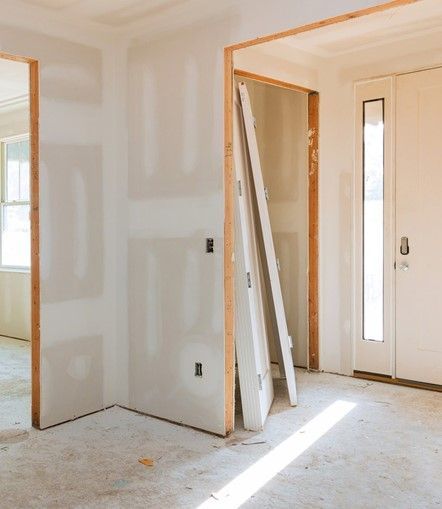
Wall drywall is faster because access is simple, containment is limited, blending zones are smaller, and minor imperfections are easier to hide.
Ceiling drywall is slower because access is elevated, the room must be protected, blending areas are wider, and the finish must withstand light from every angle.
The cost difference comes from labor intensity and finish sensitivity, not material quantity.
When Higher Ceiling Costs Are Logical
Higher ceiling pricing is warranted when the surface shows signs that the problem is structural or moisture-related. These include soft areas, spreading stains, seam cracking, bubbling texture, or paint peeling with dampness behind it.
In those cases, the job becomes corrective. The ceiling must be stabilized before it can be refinished.
Frequently Asked Questions
Why does ceiling drywall cost more than walls?
Because overhead labor is slower, containment is broader, application is more delicate, and the finish must withstand harsh lighting.
Is ceiling drywall harder than wall drywall?
Yes. Gravity interferes with every step, and flaws are harder to correct invisibly.
Can I patch a ceiling myself?
You can, but most DIY ceiling patches remain visible due to uneven feathering and texture mismatch.
Does ceiling texture raise the cost?
Yes. Matching popcorn, knockdown, or orange peel overhead requires more control and time.
Can water-damaged drywall ever be saved?
No. Most ceiling damage originates from moisture or movement and requires deeper correction.
Conclusion
Ceiling drywall costs more than wall work because the surface is less forgiving, the labor is slower, and the damage is often connected to systems above the room. Gravity reshapes application. Light exposes flaws. Dust demands full-room protection. Moisture frequently sits behind the surface.
What appears to be a simple patch is one of the most technically sensitive areas in a home.
For homeowners in Easthampton and the surrounding area, Frenchie Drywall provides ceiling and wall drywall services designed to correct the problem at its source and restore the surface cleanly and accurately.