What Makes Water-Damaged Drywall More Expensive to Fix?
January 25, 2026
Introduction
Water damage changes the meaning of “repair.” A cracked wall is cosmetic. A dent is inconvenient. But once drywall gets wet, the problem becomes structural and environmental. That faint yellow ring on your ceiling is not just a stain—it is proof that moisture entered a system that was never meant to hold it.
Homeowners often expect water-damaged drywall to be a simple patch-and-paint job. What they discover instead is that these repairs involve inspection, drying, removal, rebuilding, and risk control. The wall is not just blemished. It is compromised.
This is why water-related drywall work costs more than impact damage. You are not paying to make a wall look better. You are paying to make it safe, dry, and stable again.
Drywall Is a System, Not a Surface
Drywall is often treated as a thin decorative layer, but it is part of a larger wall system. When water enters, it affects more than what you can see.
Moisture inside a wall typically causes:
- Weakening of the gypsum core
- Warping of the paper facing
- Breakdown of seams and joint tape
- Rusting of fasteners
- Saturation of insulation
- Activation of mold spores
Even if the surface dries, internal components may remain damaged. That is why water-damaged drywall cannot be treated like a dent or crack.
Why Water Changes the Repair Process
With ordinary drywall damage, the goal is cosmetic restoration. With water damage, the goal becomes system recovery.
A professional contractor now has to think about:
- Where the water came from
- How far it traveled
- Whether moisture is still present
- Which materials are compromised
- Whether mold risk exists
- How to prevent repeat failure
This shift from “surface fix” to “system correction” is what changes both the scope and the cost.
Where the Extra Cost Actually Comes From
The added expense does not come from drywall sheets or joint compound. It comes from the work that has to happen before a wall can be safely closed again.
Moisture Investigation
Before repairs begin, professionals may need to inspect behind the surface, use moisture meters, or open small sections to track where water traveled. A stain is rarely the full boundary of damage.
Controlled Removal
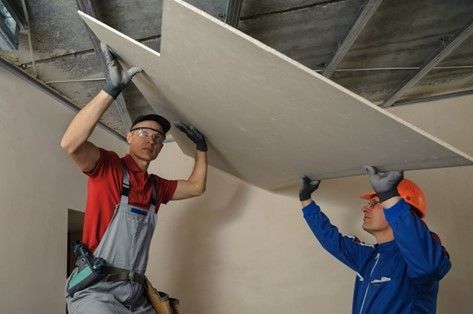
Water-compromised drywall cannot always be saved. Soft, stained, or crumbling material must be cut out. This adds demolition time, debris handling, and surface preparation for rebuilding.
Drying and Waiting
Even after removal, surrounding materials may still hold moisture. Walls may need airflow, dehumidification, and waiting periods before new drywall can be installed.
Mold Prevention
If moisture sat in the wall for more than a short period, mold risk increases. Contractors may need to expand removal areas or treat surfaces to prevent future growth.
Rebuild and Blend
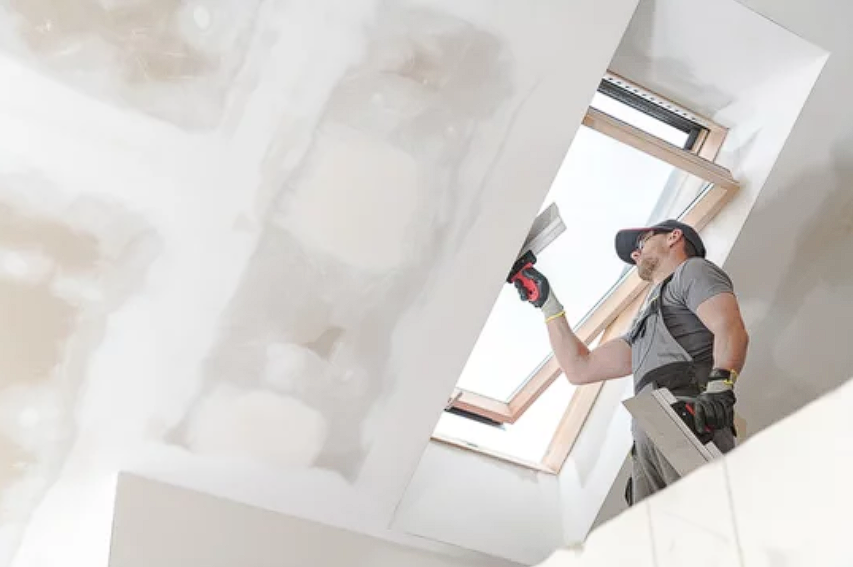
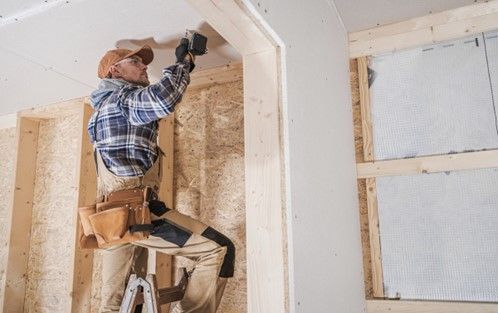
Once the wall is safe, new drywall is installed, seams are reinforced, multiple compound layers are applied, surfaces are sanded, texture is matched, and paint is blended. Water damage often occurs in ceilings or high-visibility areas, making this stage more demanding.
Why a Small Stain Can Mean a Large Opening
Water travels. Gravity pulls it downward. Framing channels guide it sideways. By the time a spot appears, moisture may have already affected a much larger area.
Contractors open wider sections in order to:
- Inspect framing and cavities
- Remove wet insulation
- Confirm full dryness
- Prevent hidden mold
The visible mark is usually the endpoint, not the origin. The cut reflects the path of damage, not the size of the stain.
When Water Damage Signals More Than a Wall Problem
Some patterns suggest that drywall repair is only one piece of the solution:
- Stains that reappear after repainting
- Soft or spongy wall sections
- Musty odors near the damage
- Bubbling paint in the same location
- Cracks forming near damp areas
These often point to roof leaks, plumbing failures, condensation problems, ventilation issues, ice damming, or foundation seepage. In these cases, drywall work becomes part of a larger corrective process.
The Real Value of Professional Water-Damage Repairs
A proper water-damage repair does more than make a wall look clean. It should:
- Remove compromised material
- Confirm complete dryness
- Prevent mold development
- Restore structural stability
- Blend seamlessly with surrounding surfaces
- Protect against repeat failure
You are not paying to hide a stain. You are paying to return the wall system to a healthy state.
In older homes, where ventilation paths, insulation types, and framing methods vary, this work requires experience. The goal is not just a clean surface. It is a wall that will not fail again.
Frequently Asked Questions
Why can’t water stains just be painted over?
Because moisture may still be present, and stains often bleed through paint. The drywall beneath may be weakened or mold-prone.
How long does water-damaged drywall need to dry?
Drying time depends on severity, airflow, humidity, and material depth. Some areas dry in days; others require longer monitoring.
Is mold always present with water damage?
Not always, but the risk increases rapidly after 24–48 hours of moisture exposure. Professionals treat every water event cautiously.
Why does a small water spot lead to a big cut?
Because water spreads beyond what you see. Contractors open enough area to inspect and stop hidden damage.
Can water-damaged drywall ever be saved?
Only if it remains structurally firm and completely dry. Soft or stained drywall usually needs replacement.
Conclusion
Water-damaged drywall is more expensive to fix because it is not just damaged—it is compromised.
Moisture alters the structure of the wall, introduces health risks, and creates hidden problems that must be addressed correctly. A proper repair involves inspection, drying, removal, rebuilding, and careful blending. Each step prevents future failure.
What looks like a simple stain is often a warning sign. Treating it properly is not an expense. It is protection.
For homeowners in Easthampton and the surrounding area, Frenchie Drywall provides professional drywall repair and restoration designed to correct water damage at its source and leave your walls clean, dry, and stable again.