How Do Multi-Room Drywall Projects Change Overall Pricing?
March 1, 2026
Introduction
Drywall pricing feels straightforward when only one wall is involved. You can see the damage. You can picture the work. The cost feels contained.
Everything changes when the project spans multiple rooms.
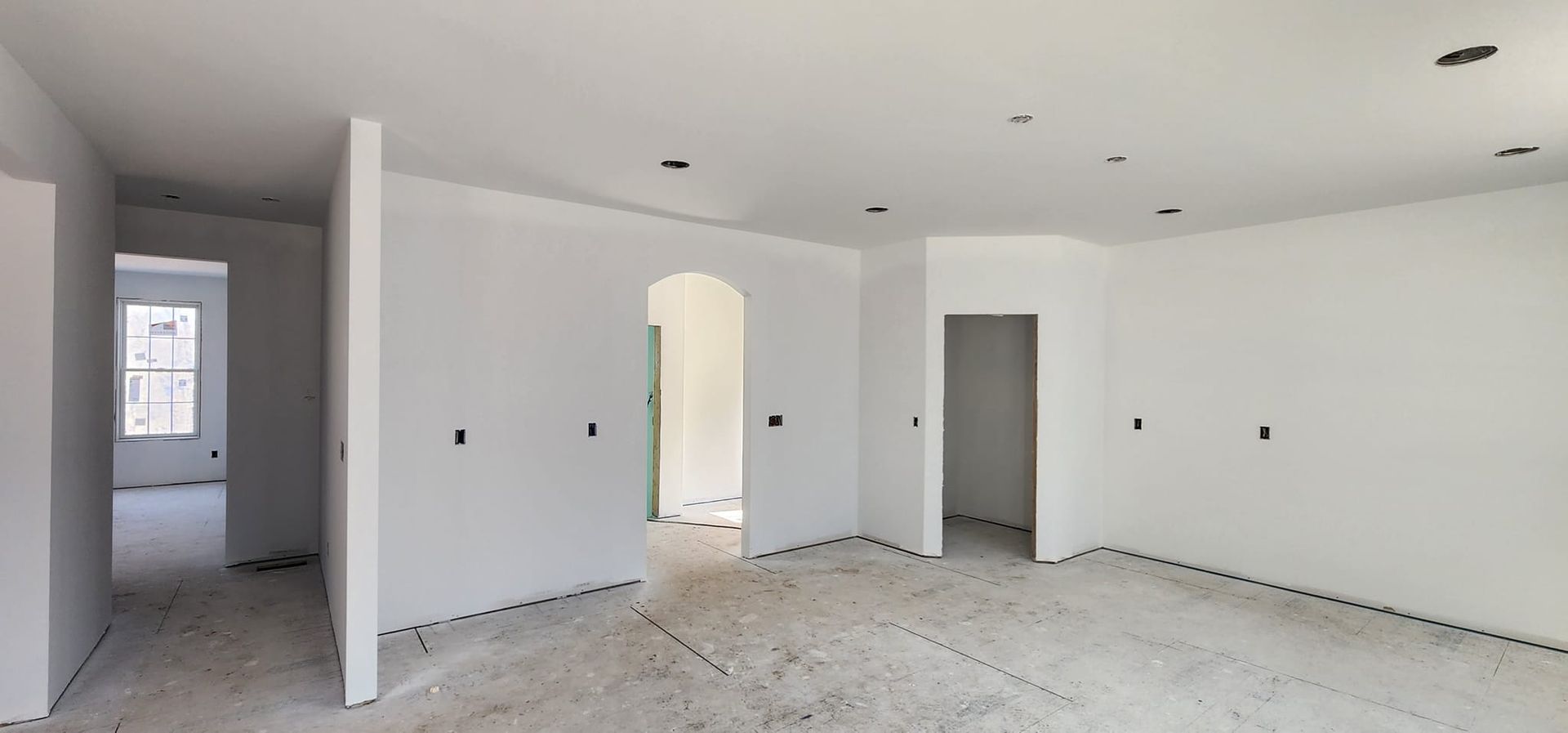
A hallway leads into a bedroom. A ceiling repair connects to a living area. A remodel affects three spaces at once. Suddenly, the price is no longer about one patch—it reflects workflow, staging, coordination, and continuity across an entire interior.
This article explains how drywall pricing shifts when work moves from a single surface to multiple rooms, what actually changes behind the scenes, and why larger projects are not priced as “one job multiplied.”
Why Multi-Room Work Is Not Linear
Homeowners often assume that three rooms cost three times as much as one room. In practice, multi-room drywall pricing does not scale that way.
Some costs increase. Others flatten.
Single-room jobs are dominated by setup and teardown. Multi-room jobs shift the cost toward production. The contractor is no longer starting and stopping. The work becomes continuous.
That changes the economics of labor.
What Gets Cheaper Per Room
When drywall spans multiple rooms, certain costs are shared instead of repeated.
These efficiencies emerge:
- Tools are unpacked once
- Containment is planned across zones
- Drying cycles overlap
- Blending is done in sequence
- Cleanup happens in stages, not resets
Instead of paying for the same preparation three times, you pay for one integrated workflow.
This is why a two-room job is rarely double the cost of a one-room job.
What Gets More Expensive Overall
While the per-room cost often drops, the total project still grows because the scope changes.
Multi-room projects introduce:
- Extended containment zones
- More complex staging
- Wider blending areas
- Longer on-site time
- Higher coordination demands
Edges must align across rooms. Seams must feel continuous. Texture and paint must remain consistent from space to space.
The work becomes architectural, not isolated.
How Workflow Reshapes Pricing
In a single-room job, the contractor cycles through:
- Set up
- Repair
- Dry
- Return
- Finish
- Clean up
In a multi-room job, that cycle transforms:
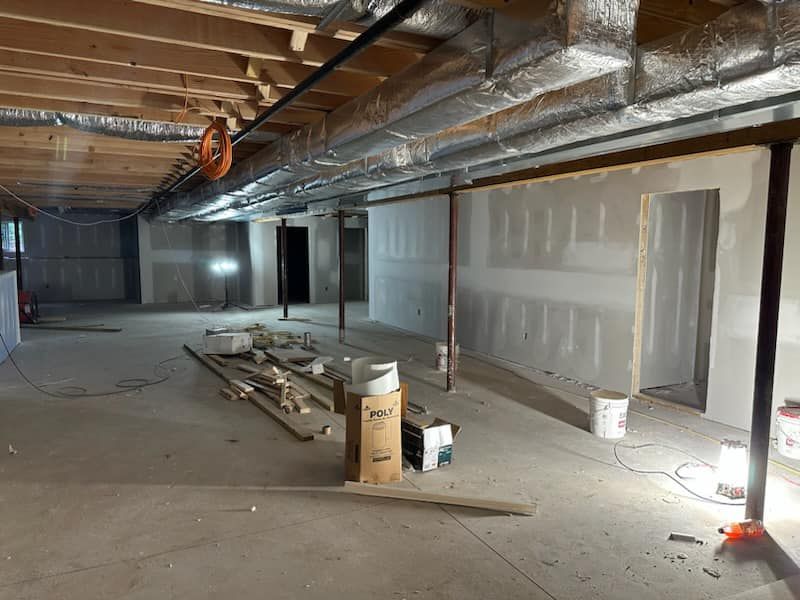
- Global setup
- Room-by-room prep
- Staggered repair
- Overlapping drying
- Sequential finishing
- Phased cleanup
The labor becomes more efficient but more complex. Pricing reflects planning and continuity rather than repetition.
Why Multi-Room Projects Often Look “Expensive”
Multi-room quotes feel large because they represent the true scope of interior work.
You are not paying for three patches. You are paying for:
- A coordinated interior environment
- Consistent surfaces across spaces
- Unified texture and finish
- Continuous transitions between rooms
- A home that feels repaired, not pieced
The result is not three fixed spots. It is a restored interior flow.
When Multi-Room Work Becomes Cost-Effective
Multi-room drywall projects are often more economical when:
- Several rooms share the same issue
- Damage follows a hallway or ceiling line
- A remodel opens multiple spaces
- Repairs are already recurring
- The home is being repainted
Bundling work avoids paying setup and blending costs repeatedly.
Instead of fixing one room this month and another next year, a single coordinated project reduces total lifetime cost.
Common Misconceptions About Multi-Room Pricing
Many homeowners believe:
- Each room is priced in isolation
- Larger projects are always overpriced
- Smaller jobs are always cheaper
- Spreading repairs over time saves money
In reality, fragmented work multiplies setup, disruption, and finish matching. A larger project often costs less than several small ones combined.
Frequently Asked Questions
Is it cheaper to fix rooms separately over time?
Usually no. Each visit repeats setup, containment, and blending.
Do multi-room jobs take longer?
Yes, but the workflow is continuous, not repetitive.
Does texture matching become harder?
Yes. Consistency across rooms raises finish standards.
Can only connected rooms be bundled?
No. Separate rooms can still share workflow and efficiency.
Will multi-room work disrupt the whole house?
Not necessarily. Proper staging isolates zones while keeping flow.
Conclusion
Multi-room drywall projects change pricing because the job becomes integrated rather than isolated. Some costs flatten. Others expand. The work shifts from patching to coordination.
Instead of paying for the same setup three times, you invest in a single continuous workflow. Instead of repairing surfaces, you restore interior continuity.
The question is no longer “What does one wall cost?”
It becomes “What does it take to restore the space as a whole?”
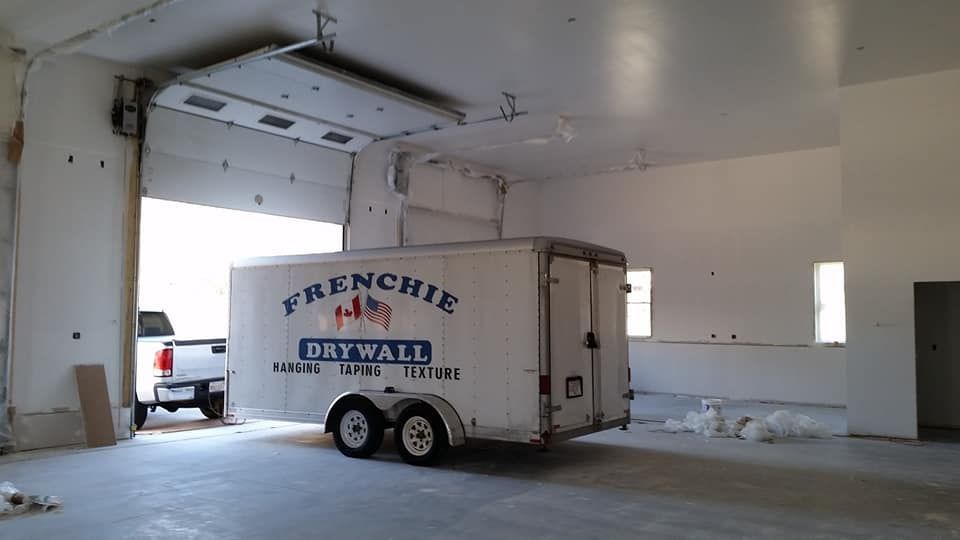
For homeowners in Easthampton and the surrounding area, Frenchie Drywall plans multi-room projects to reduce lifetime cost, limit disruption, and deliver consistent, seamless interiors.