Is It Cheaper to Replace Damaged Drywall or Keep Repairing It?
February 22, 2026
Introduction
Drywall damage almost always starts small. A crack forms. A corner chips. A stain appears. The instinct is to repair it and move on. In many cases, that instinct is right.
The problem begins when the same area needs attention again—and again. What feels like a series of minor fixes can quietly become more expensive than replacing the damaged section outright. The cost question is not about the first repair. It is about what happens to that wall over time.
This guide explains how repair costs accumulate, what replacement actually changes, and how to decide which option is cheaper for your specific situation.
What You Pay For Every Time You “Just Patch It”
A drywall repair is not a single action. Each visit repeats the same labor cycle:
- Protecting the room
- Preparing the surface
- Applying compound
- Waiting for drying
- Sanding
- Blending texture
- Matching paint
When damage returns, that entire cycle happens again. The cost is not in the compound. It is in the labor that restarts every time.
A wall repaired once is inexpensive. A wall repaired three or four times is no longer cheap—it is being maintained.
What Replacement Actually Changes
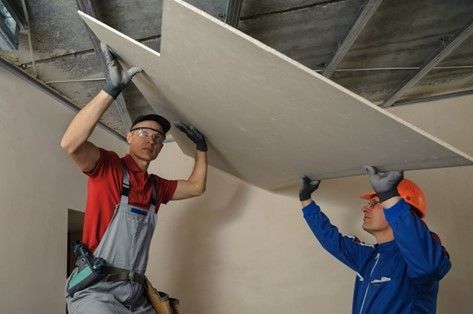
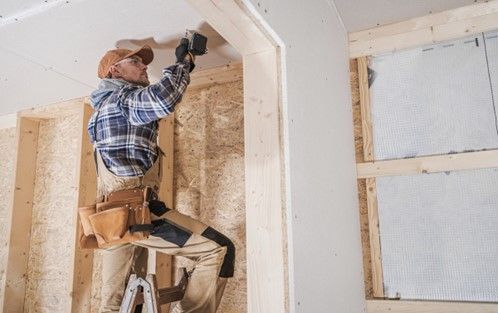
Replacing drywall does not mean tearing out a whole room. It means removing the unstable section and rebuilding it from a clean base.
Replacement removes:
- Soft or weakened gypsum
- Warped paper facing
- Failed seams
- Built-up compound layers
- Areas affected by moisture
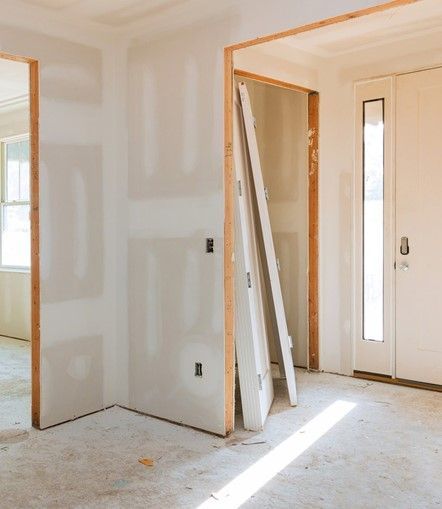
The wall is rebuilt with new board, fresh seams, and a level surface. The structure resets. Instead of managing symptoms, the surface is restored to a stable state.
Repair spreads cost across time. Replacement concentrates it into one job. Over the life of the wall, replacement often costs less.
When Repair Is Still the Cheaper Option
Repair is financially smart when the damage is limited and stable.
This is usually true when the issue is:
- Caused by a single impact
- Confined to a small area
- Firm to the touch
- Completely dry
- Not returning
A door-handle hole, a furniture dent, or a small nail pop fits this category. The wall itself is sound. The problem is only at the surface.
In these cases, replacement adds cost without adding value.
When Replacement Becomes the Cheaper Path
Replacement is often the lower-cost option over time when damage shows patterns rather than events.
These patterns include:
- Cracks reopening in the same place
- Patches that sink or outline
- Damage tracking along seams
- Soft or spongy areas
- Stains that return after painting
- A history of moisture in that spot
- Thick, layered repair buildup
These signs mean the drywall is no longer stable. Each repair treats what you see. Replacement fixes what the wall has become.
A Simple Cost Decision Flow
Use this sequence to decide which option is cheaper long-term:
- Has this area been repaired before?
- Did the same damage return?
- Does the surface feel soft, uneven, or stained?
- Does the problem follow a seam or edge?
- Was water involved at any point?
If you answer “yes” to more than one, replacement is usually cheaper over the life of the wall.
If you answer “no” to all of them, repair is typically the better financial choice.
Why Repairs Feel Cheaper Even When They Aren’t
Repairs feel affordable because they are incremental. Each one is small. Each one seems reasonable.
Replacement feels expensive because it is decisive.
But repairs compound. Each visit repeats setup and cleanup. Each patch expands the blend area. Each repaint grows in scope. Each failure restarts the cycle.
Replacement ends that cycle. It converts recurring small costs into a single permanent fix.
Frequently Asked Questions
Is replacing drywall always more expensive than repairing it?
In the short term, yes. Over time, repeated repairs often exceed replacement cost.
How many times can drywall be repaired?
There is no fixed limit, but stability declines once seams weaken, compound layers build, or moisture is involved.
Can only part of a wall be replaced?
Yes. Sections can be removed and rebuilt without replacing the entire room.
Does moisture always require replacement?
Not always. If drywall dries fully and remains firm, repair may work. Soft or stained drywall should be replaced.
Will a replaced section stand out?
A proper rebuild blends into the surrounding surface so it disappears.
Conclusion
Repair feels cheaper because it is smaller. Replacement feels expensive because it is final. The real cost is measured by how many times you pay for the same wall.
When damage is isolated and stable, repair saves money. When it repeats, spreads, or involves moisture, replacement stops the cycle and becomes the cheaper option over time.
The real question is not whether drywall
can be patched.
It is whether it will
stay fixed after it is patched.
For homeowners in Easthampton and the surrounding area, Frenchie Drywall helps determine whether repair will last or replacement will save you money in the long run.