How Does New Construction Drywall Differ From Renovation Work?
April 26, 2026
Introduction
Drywall looks the same once it is painted, but the way it is installed depends heavily on whether the project is new construction or a renovation. The surface may end up smooth in both cases, yet the work behind it follows very different rules.
New construction drywall is built in open space. Renovation drywall is built inside an existing home. That single difference changes layout, workflow, speed, precision, and cost.
Understanding how these two types of projects differ helps homeowners set realistic expectations and avoid confusion when quotes vary from one job type to another.
What Makes New Construction Drywall Faster
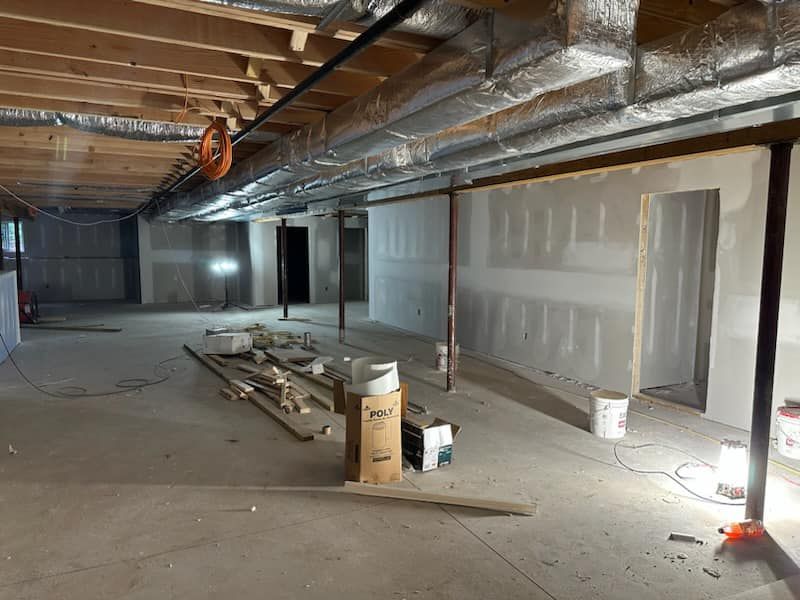
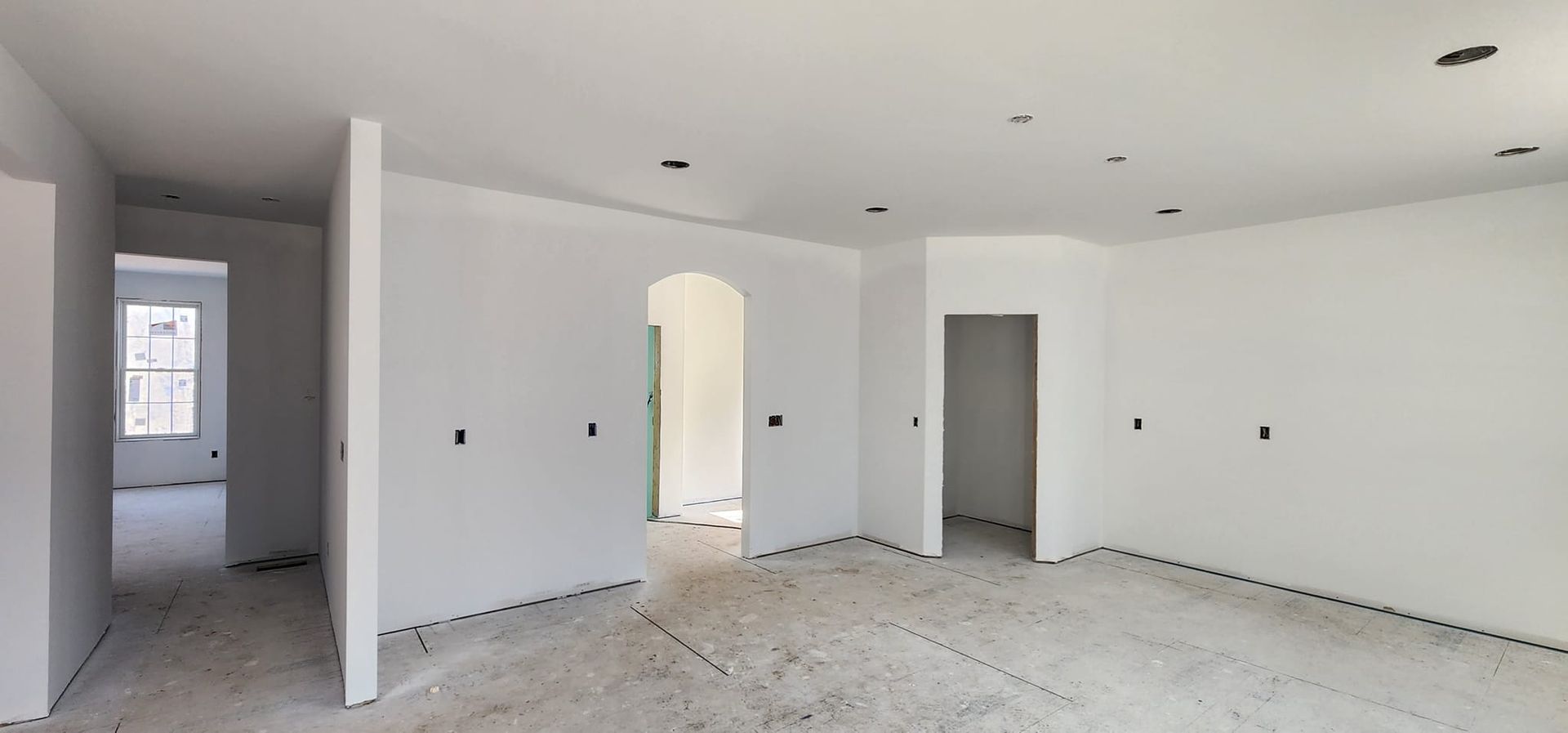
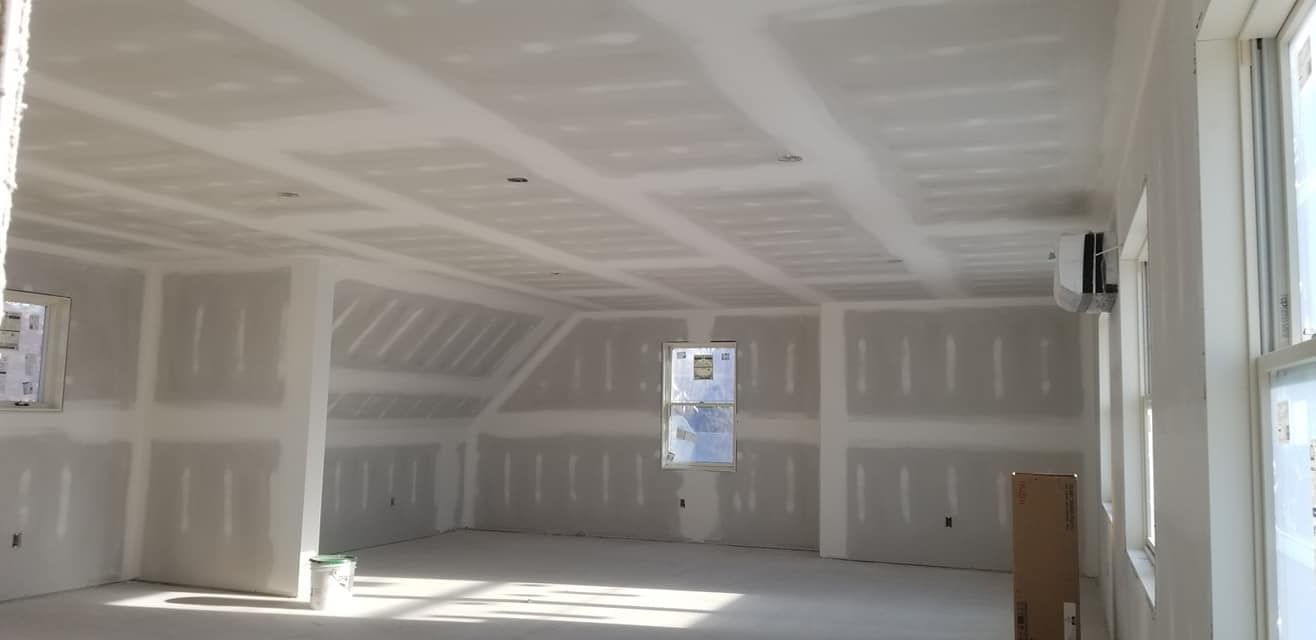
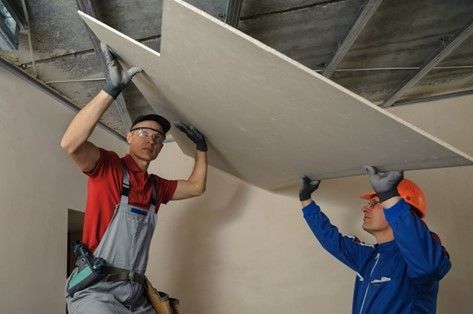
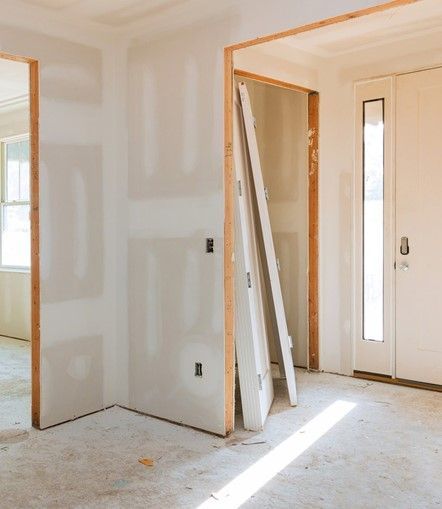
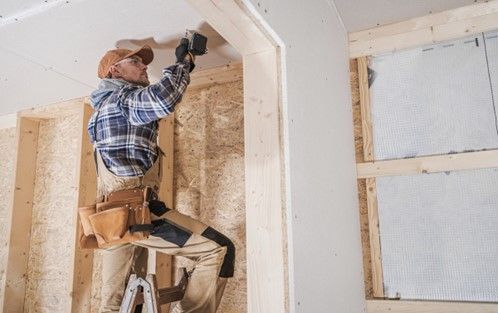
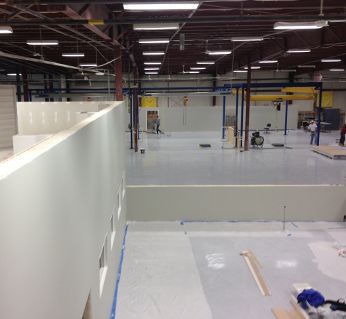
In new construction, drywall is installed before a home is lived in. Walls are open. Floors are unfinished. Nothing has to be protected.
This environment allows for:
- Continuous sheet runs without obstacles
- Fast panel placement
- Unrestricted ladder movement
- Broad sanding and spraying
- Uniform framing surfaces
Because nothing needs to be preserved, speed becomes the priority. Crews can move room to room without stopping. Mistakes are easier to correct. Seams can be planned around framing rather than furniture or trim.
The job is production-driven.
What Makes Renovation Drywall Slower
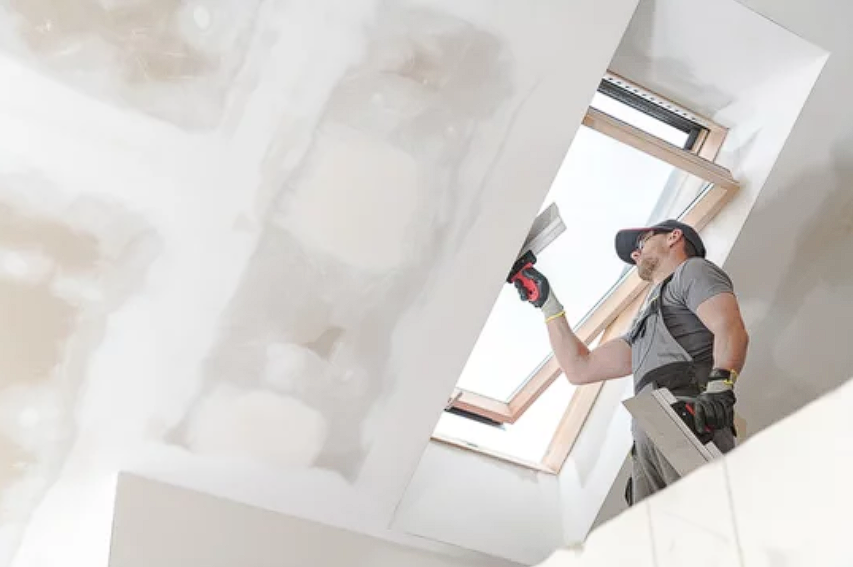
Renovation drywall is performed inside a finished home. Every surface around the work must be protected.
Renovation projects introduce:
- Furniture and flooring to shield
- Trim and fixtures to work around
- Occupied spaces to isolate
- Irregular framing from older builds
- Existing walls to blend into
Each of these adds steps before the drywall work even begins. Cutting, sanding, and finishing must be controlled. Movement is limited. Access is tighter. The pace becomes deliberate.
The job becomes surgical rather than industrial.
How Workflow Changes Between the Two
The sequence of work changes dramatically between environments.
In new construction, the process is:
- Hang all panels rapidly
- Tape seams in bulk
- Apply compound across zones
- Sand and finish in large passes
- Move on to paint
In renovation work, the process becomes:
- Protect the surrounding space
- Isolate the work area
- Remove damaged material
- Fit panels to existing geometry
- Reinforce transition seams
- Apply compound in controlled stages
- Blend into surrounding surfaces
- Clean and restore the room
The number of steps increases because the goal is not just to build a wall, but to preserve everything around it.
Why Renovation Work Requires More Precision
New construction drywall can hide seams behind trim, cabinets, and future finishes. Renovation drywall must match what already exists.
This requires:
- Seam placement that aligns with old surfaces
- Texture matching
- Paint blending
- Edge transitions that disappear
A new home can tolerate minor variation because all surfaces are new. A renovated room must integrate with surfaces that have aged, shifted, and settled.
The drywall is not just built. It is blended.
How Cost Is Affected
New construction drywall benefits from scale and speed. Labor is optimized. Setup is minimal. Containment is unnecessary.
Renovation drywall carries added labor because:
- Protection is required
- Work zones must be isolated
- Finishes must be matched
- Access is limited
- Cleanup is continuous
The materials may be the same, but the labor profile is not. Renovation pricing reflects complexity, not square footage.
When Each Approach Is Used
New construction drywall applies to:
- Ground-up homes
- Additions before finishes are installed
- Shell builds
- Major expansions
Renovation drywall applies to:
- Room remodels
- Repairs in lived-in homes
- Structural changes inside existing walls
- Partial rebuilds
Both produce finished walls. The environment determines the method.
Frequently Asked Questions
Is renovation drywall always more expensive?
Per square foot, often yes, because of protection, blending, and limited access.
Does renovation work take longer?
Yes. Each step is controlled to avoid damage to the home.
Can new construction techniques be used in a remodel?
Not safely. Open-site methods create dust and damage in occupied spaces.
Why does renovation drywall feel slower?
Because it must coexist with flooring, furniture, trim, and occupants.
Does the finish look different?
A professional renovation finish should be indistinguishable from new work.
Conclusion
New construction drywall and renovation drywall serve the same purpose but operate in completely different environments. One is built in open space. The other is built inside a finished home.
New construction prioritizes speed and volume. Renovation prioritizes protection, precision, and integration.
The walls may look identical once painted. The work that creates them is not.
For homeowners in Easthampton and the surrounding area, Frenchie Drywall handles both new builds and renovation projects with methods designed for each environment, ensuring clean results without unnecessary disruption.